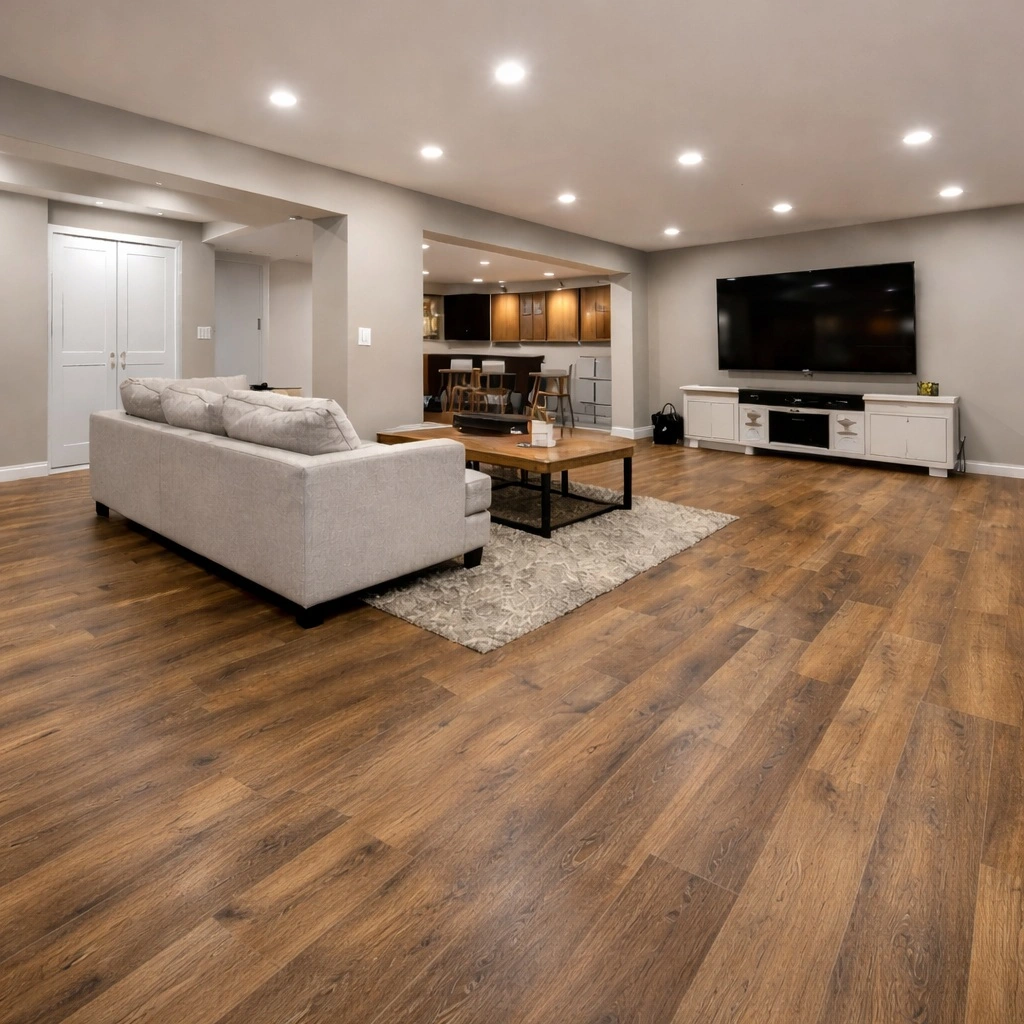
Vinyl plank flooring is usually a better choice than laminate for basements because it is waterproof and resistant to moisture coming through concrete slabs. Laminate flooring contains a wood fiber core that can swell if exposed to moisture. In basements where concrete releases vapor, vinyl plank generally performs more reliably over time.
When installing flooring over a basement concrete slab, moisture resistance becomes a critical factor. Vinyl plank and laminate flooring may look very similar, and both are popular floating floors that can mimic hardwood. However, their performance in basement environments can be very different.
Concrete basement slabs often release moisture vapor, especially in older homes that may not have a vapor barrier underneath the slab. That small detail can make a major difference when choosing basement flooring over concrete.If you are comparing different materials, you may also want to explore the best waterproof flooring options for basements before selecting a material.
Vinyl vs Laminate for Basement Flooring: Quick Comparison
| Feature | Vinyl Plank Flooring | Laminate Flooring |
| Waterproof | Yes | No |
| Moisture Resistance | Excellent | Moderate |
| Core Material | PVC or rigid core composite | Wood fiber board |
| Flood Tolerance | High | Low |
| Thickness | 4 to 8 mm typical | 8 to 12 mm typical |
| Installation | Floating floor | Floating floor |
| Cost | Moderate | Lower |
| Basement Suitability | Excellent | Conditional |
If moisture vapor is present in the concrete slab, vinyl plank flooring typically performs better over time.
Key Difference Between Vinyl and Laminate in Basements
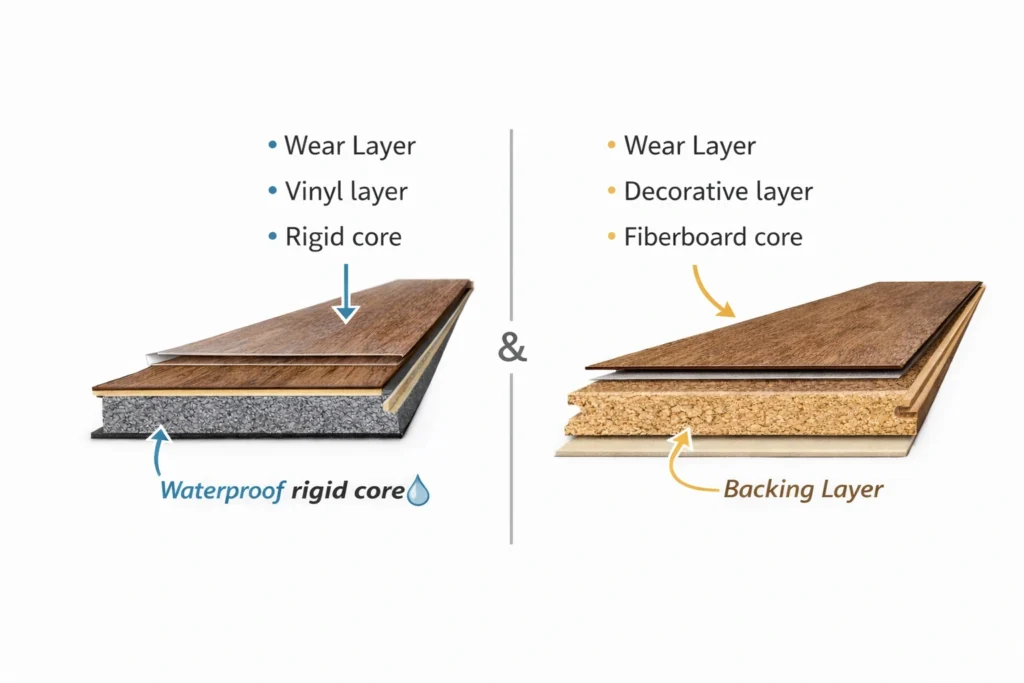
The main difference between vinyl plank and laminate flooring in a basement is moisture resistance.
Vinyl plank flooring is fully waterproof and designed to handle humidity or moisture that may pass through concrete slabs.
Laminate flooring contains a compressed wood fiber core. When moisture reaches the seams or edges of laminate boards, the fiber core can absorb water and expand. Over time, this can lead to swelling, raised seams, or permanent damage.
Because basements frequently experience humidity and vapor movement through concrete, flooring materials installed over concrete slabs must tolerate those conditions.
Why Basement Concrete Requires Special Flooring
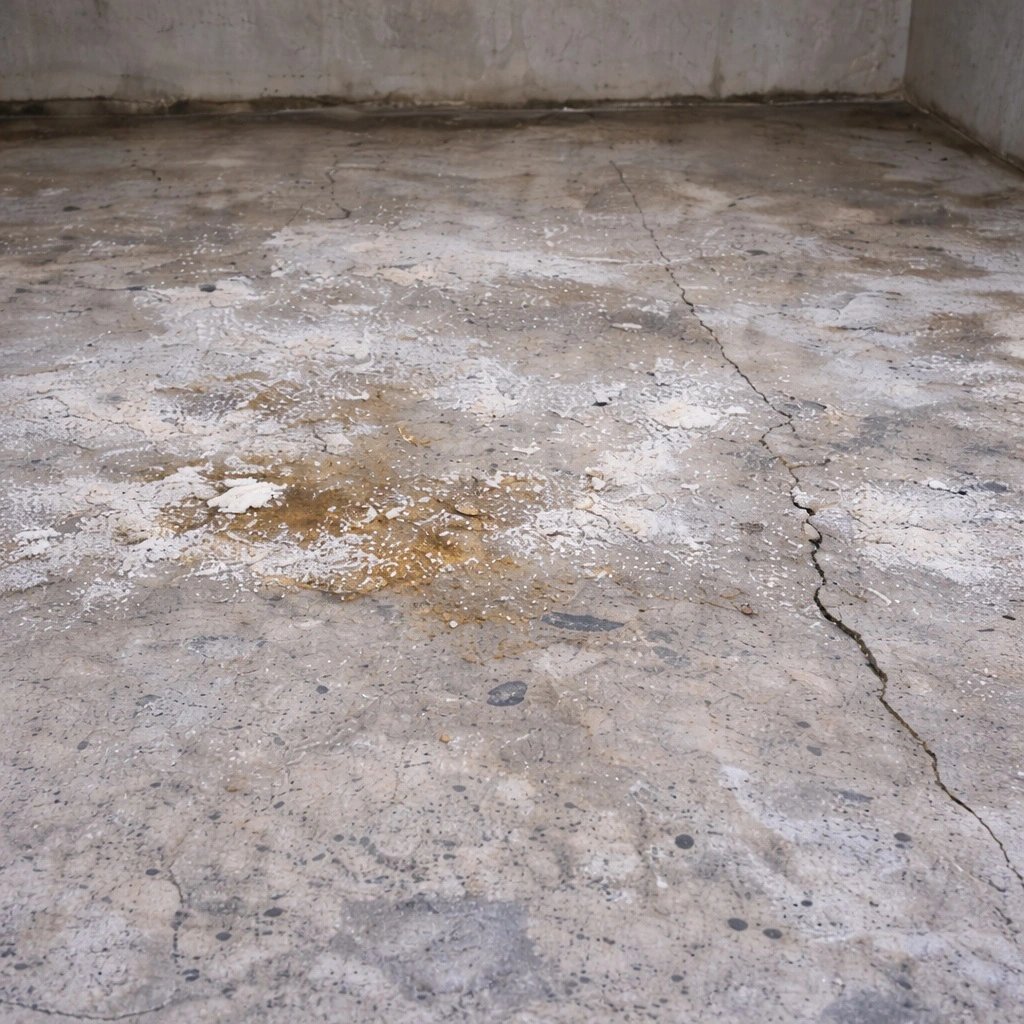
Even if a basement never floods, concrete slabs often allow moisture vapor to move upward from the soil beneath the home.
This moisture movement is common in basements and can affect flooring installed directly over the slab.
Common signs of moisture movement include:
• White powder deposits on the concrete surface, called efflorescence
• Damp areas under rugs or storage items
• Peeling or lifting paint on the concrete floor
While this vapor rarely causes structural damage to the home, it can damage flooring materials that are sensitive to moisture.
Laminate flooring contains wood fiber that can absorb moisture and expand. Vinyl flooring is made from synthetic materials and does not absorb moisture in the same way, which is why it is often used as waterproof basement flooring.
Pros and Cons of Vinyl vs Laminate for Basement Floors
| Flooring Type | Pros | Cons |
| Vinyl Plank | Waterproof, durable, moisture resistant | Waterproof, durable, moisture-resistant |
| Laminate | Thick feel, usually lower cost | Sensitive to moisture and humidity |
Both materials are popular floating floors, but their performance in basements depends largely on moisture conditions.
Basement Flooring Decision Guide
| Basement Condition | Recommended Flooring |
| Older slab without a vapor barrier | Vinyl plank |
| Older slab without a vapor barrier | Vinyl plank |
| Dry basement confirmed by testing | Vinyl plank |
| Risk of occasional water exposure | Vinyl plank |
For many homes with basement flooring over concrete, vinyl plank or rigid core LVP for basements provides a safer long-term option.
A Common Basement Flooring Scenario
Many homeowners encounter a situation similar to this when renovating a basement:
• The home is 40 to 50 years old
• The concrete slab has no vapor barrier underneath
• There is no visible water intrusion
• Efflorescence appears in some areas of the slab
• Basement ceiling height is limited
In many cases, the previous floor may have been a thin laminate installed directly on the concrete slab. The floor may have looked fine initially, but after several years, the plank edges begin to chip, swell, or separate.
When replacing that floor, homeowners often ask whether laminate should be installed again or if vinyl plank flooring for a concrete slab basement is a better solution.
Contractor Tip: Testing Basement Concrete for Moisture
Before installing any flooring in a basement, it is important to check whether the concrete slab is releasing moisture vapor.
A simple test many installers use is the plastic sheet test.
Tape a square piece of clear plastic to the concrete floor and leave it in place for 24 to 48 hours.
If condensation forms under the plastic, the slab is releasing moisture vapor. In this situation, waterproof flooring such as vinyl plank is generally a safer choice than laminate.
Professional installers may also use moisture meters or calcium chloride tests to measure vapor levels more accurately.
Installing Laminate Flooring in a Basement
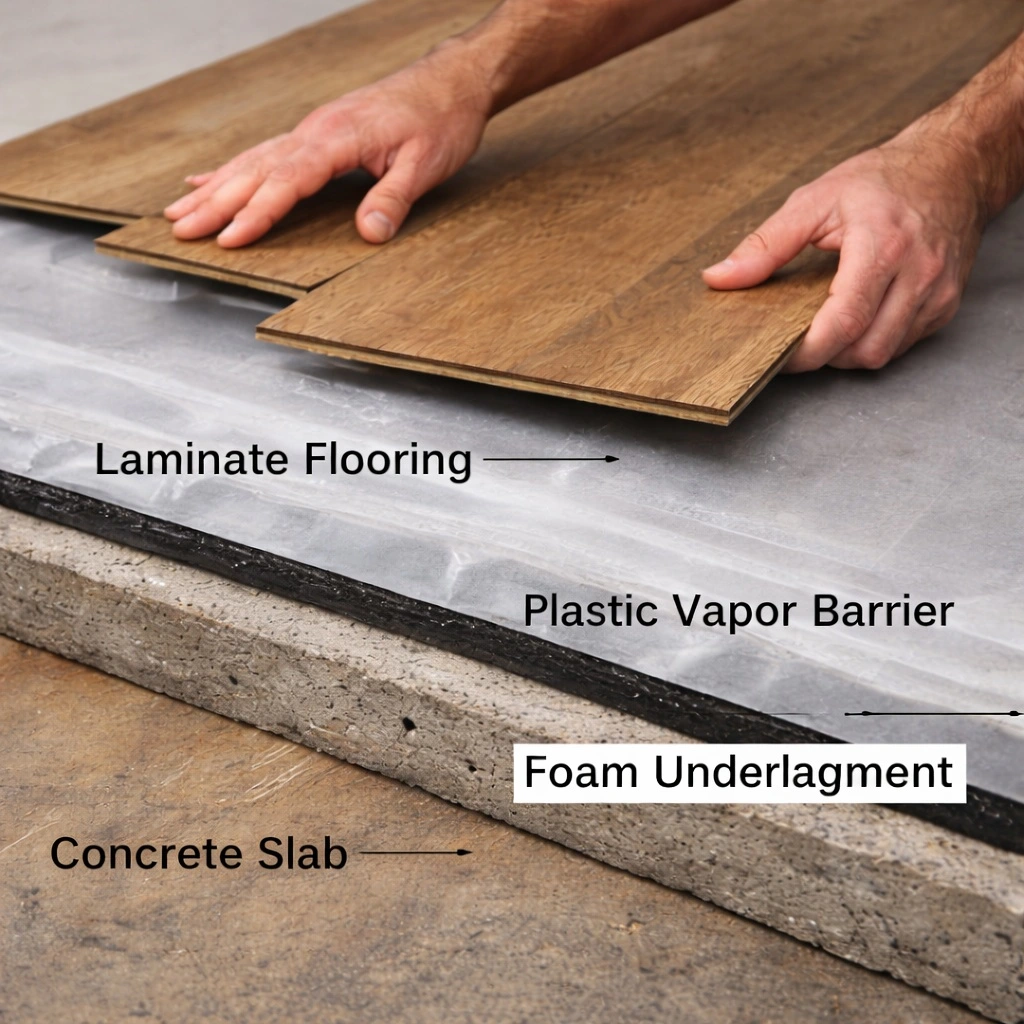
Laminate flooring can still work in basements under certain conditions.
A typical installation may include:
• Moisture barrier or vapor barrier film
• Foam underlayment
• 10 to 12 mm laminate boards
Higher quality laminate products with AC4 or AC5 wear ratings offer better durability and scratch resistance.
However, laminate has one major limitation. If moisture reaches the fiber core, the boards can absorb water and swell.
Possible long-term issues include:
• Swollen plank edges
• Raised seams
• Soft or spongy areas in the floor
Once laminate boards swell, the damage cannot usually be reversed.
Why Vinyl Plank Flooring Works Well in Basements
Vinyl plank flooring has become one of the most popular choices for basement flooring over concrete.
Because it is made from synthetic materials, vinyl does not absorb moisture the way laminate does.
Key benefits of vinyl plank flooring include:
• Waterproof construction
• Resistance to moisture vapor
• Durable wear layers suitable for pets and children
• Floating installation over concrete slabs
Rigid core vinyl plank flooring typically performs best in basements.
Many installers recommend products with:
• 5 to 6 mm thickness
• At least a 12 mil wear layer
Very thin vinyl products may show imperfections in the concrete beneath them, so proper floor preparation is important.
Can Vinyl Plank Be Installed Directly on Concrete?
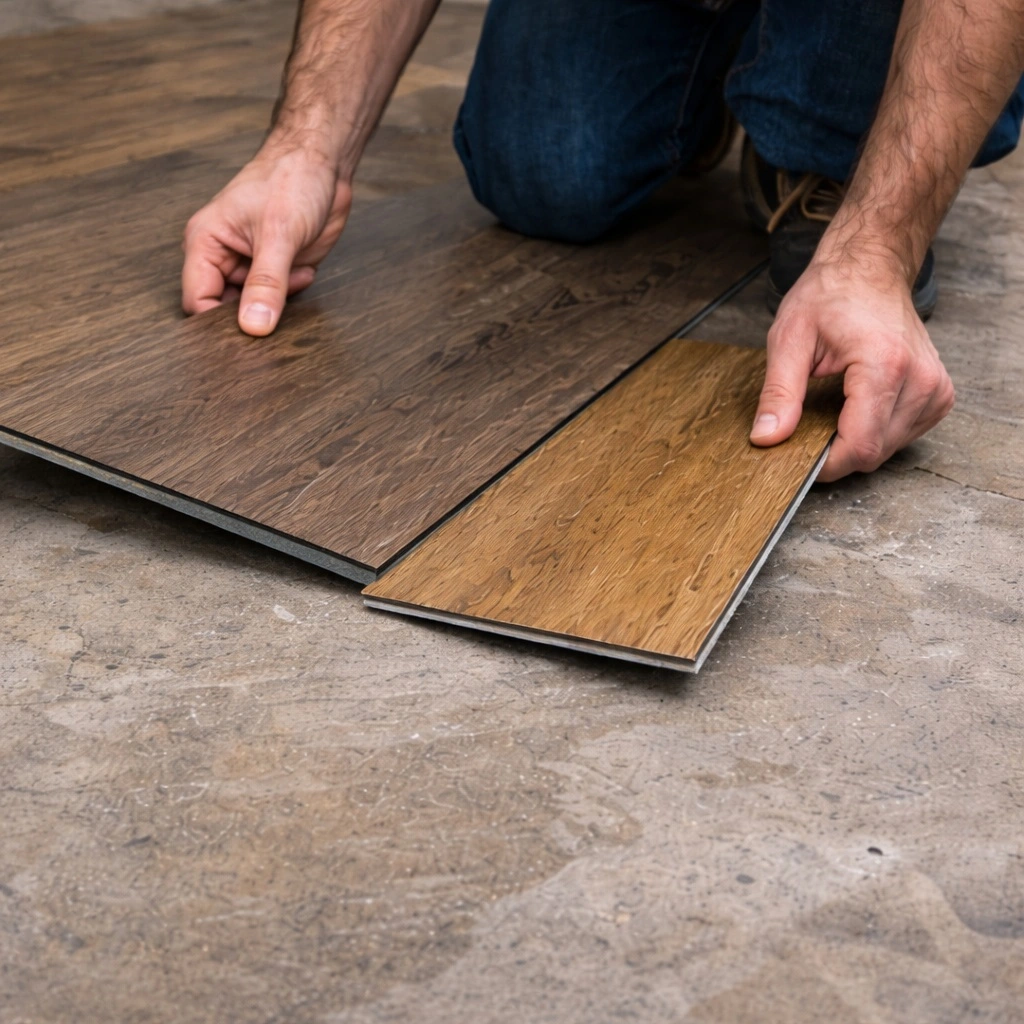
Yes. Most vinyl plank flooring can be installed directly over a concrete basement floor if the surface is properly prepared.
Before installation, the concrete slab should be:
• Clean
• Flat and level
• Tested for excess moisture
Many vinyl plank systems are designed to float over concrete slabs. In some installations, a thin moisture barrier or underlayment is added to reduce vapor movement and improve comfort underfoot.
Proper preparation helps prevent movement, noise, or long-term flooring damage.
Basement Ceiling Height and Flooring Thickness
Ceiling height is another factor to consider in basement renovations.
Thicker flooring systems can reduce available headroom.
Laminate flooring installations may include several layers:
• Vapor barrier
• Foam underlayment
• Thick laminate boards
Vinyl plank flooring is usually thinner and may require fewer layers. This can help preserve ceiling height in basements with limited clearance.
Cost Comparison: Vinyl vs Laminate Basement Flooring
Example cost comparison for approximately 500 square feet:
| Flooring Type | Relative Cost |
| Laminate Flooring | Lower upfront cost |
| Vinyl Plank Flooring | About 20 to 30 percent higher |
Laminate may cost less initially. However, if moisture eventually damages laminate flooring, replacement costs can exceed the initial savings.
Vinyl plank flooring often provides better long-term value in basement environments.
When to Choose Vinyl vs Laminate for a Basement
Vinyl plank flooring is usually the safer option in most basement environments.
Choose vinyl plank if:
• The basement slab shows moisture or efflorescence
• The home may not have a vapor barrier under the slab
• You want waterproof basement flooring
• The basement may experience humidity or occasional water exposure
Laminate flooring may work if:• Moisture testing confirms the slab is dry
• A proper vapor barrier will be installed
• The basement has no history of moisture issues
• You prefer a thicker feel underfoot
Key Takeaways
- Vinyl plank flooring is waterproof and handles basement moisture well
- Laminate flooring contains wood fiber that can swell when exposed to moisture
- Vinyl flooring is typically thinner and helpful in basements with limited ceiling height
- Laminate may cost less initially, but it carries a greater moisture risk
- Rigid core vinyl plank is often the safer long-term choice for basement floors
Vinyl vs Laminate for Basement Floors: Final Verdict
For most basements, vinyl plank flooring is the safer long-term option.
It handles moisture vapor more effectively and is less likely to be damaged if water enters the space.
Laminate flooring can still work in some situations if:
• The concrete slab passes moisture testing
• A proper vapor barrier is installed
• The basement has no history of moisture problems
However, when moisture conditions are uncertain, vinyl plank flooring provides a greater margin of protection.
Frequently Asked Questions
Is laminate flooring good for basements?
Laminate flooring can work in dry basements if proper moisture testing and vapor barriers are used. However, laminate is more sensitive to moisture than vinyl plank and may swell if exposed to water or humidity.
Is vinyl plank better than laminate for concrete floors?
Yes. Vinyl plank flooring is usually better for concrete floors because it is waterproof and resistant to moisture vapor that can move through basement slabs.
What thickness vinyl plank is best for basements?
Many installers recommend rigid core vinyl planks with 5 to 6 mm thickness and a 12 mil or thicker wear layer for basement environments.
Can vinyl plank be installed directly on concrete?
Yes. Vinyl plank flooring can typically be installed over concrete if the slab is clean, flat, and tested for excess moisture. Some installations include a moisture barrier or underlayment.
Do you need underlayment for vinyl planks on concrete?
Many rigid core vinyl plank floors include an attached underlayment and can be installed directly over concrete. In some cases, installers add a moisture barrier or additional underlayment to reduce vapor movement and improve comfort.
What is the best waterproof flooring for basements?
Common waterproof flooring options for basements include rigid core vinyl plank, sheet vinyl, and tile. Vinyl plank flooring is one of the most popular options because it combines waterproof construction with easy floating installation.
Can moisture ruin laminate flooring?
Yes. Laminate flooring contains a wood fiber core that can absorb moisture. If water reaches the seams or edges of laminate planks, the boards may swell or warp, and the damage is usually permanent.
Wrap Up :
Choosing basement flooring is not only about appearance. The most important factor is selecting a material that can handle moisture, humidity, and temperature changes over a concrete slab.
For many homeowners, vinyl plank flooring provides a strong balance of durability, waterproof protection, and long-term performance for basement floors. When moisture conditions are uncertain, vinyl plank is often the safer choice compared to laminate flooring.