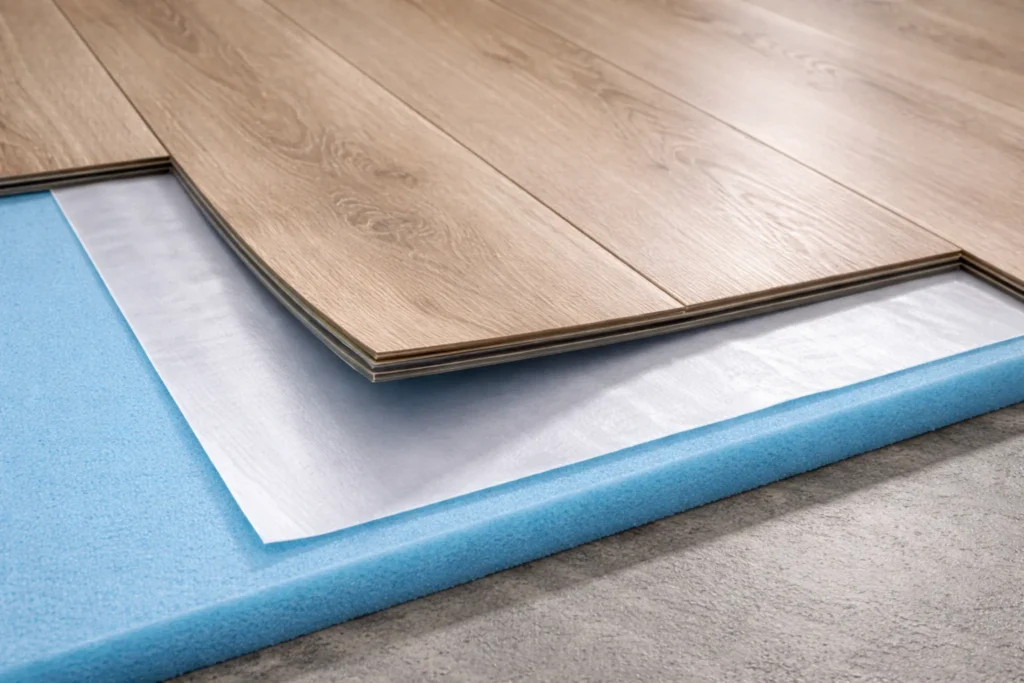
The right underlayment for vinyl plank flooring plays a big role in how your floor performs over time. While vinyl planks are durable on their own, the layer underneath affects comfort, noise, and long-term stability. A good vinyl flooring underlayment helps improve durability, supports better installation results, and creates a more solid feel when you walk on the floor.
For most homes, using the right LVP underlayment also adds comfort underfoot and reduces hollow sounds, especially in larger rooms or upper floors. It can also help protect your subfloor from moisture and minor imperfections.
In this guide, you’ll learn how to choose the best underlayment based on your subfloor, room type, and performance needs, so your flooring looks better and lasts longer.
Do You Need Underlayment for Vinyl Plank Flooring?
In most cases, yes, you do need underlayment for vinyl plank flooring. It improves comfort, reduces noise, and helps protect against moisture, especially on concrete.
However, it depends on the type of flooring you are using and the condition of your subfloor. Many modern vinyl planks come with pre-attached backing, which can eliminate the need for additional underlayment in some situations. If your flooring includes this layer, always check the manufacturer’s guidelines before adding anything extra.
For floating floors, underlayment plays an important role in providing a stable base and improving overall performance. It helps absorb sound, smooth out minor imperfections, and makes the floor feel more solid underfoot.
Your subfloor condition also matters. If the surface is uneven or slightly rough, underlayment can help create a more even installation. On the other hand, a perfectly smooth subfloor may require less support.
If you’re asking, do I need underlayment for vinyl flooring on concrete, the answer is almost always yes. Concrete can retain moisture, so using underlayment with a vapor barrier helps protect your flooring from moisture exposure and long-term damage.
In short, underlayment is not always required, but in most cases, it improves performance and extends the life of your floor.
Best Underlayment for Vinyl Plank Flooring
The best underlayment for vinyl flooring depends on where and how the floor will be used. Instead of choosing one option for every situation, it’s better to match the underlayment to your space, traffic level, and subfloor type.
If you’re wondering how to choose the best underlayment for floors, start by looking at your environment and daily use.
For Concrete Subfloors :
If you’re installing over concrete, always use underlayment for vinyl flooring on concrete with a built-in moisture barrier. Concrete can hold and release moisture over time, which can damage your flooring. Foam underlayment with a vapor barrier is usually the most practical choice because it protects against moisture while still providing comfort and sound reduction.
For Basements :
Basements often deal with higher humidity levels, so moisture protection is critical. You can also explore different basement flooring options to choose materials that handle moisture better. The best basement underlayment is typically cork or high-density foam with moisture resistance. These materials help control temperature, reduce dampness, and improve comfort in colder spaces.
For High Traffic Areas :
In busy areas like hallways, kitchens, or commercial spaces, focus on load resistance and durability. Underlayment must handle constant foot traffic impact without compressing over time. High-density foam or rubber underlayment works well here because it maintains its structure and supports the flooring properly.
For Residential vs Commercial Use :
In most residential settings, standard foam or felt underlayment is enough for comfort and noise control. For residential vs commercial applications, the difference comes down to durability. Commercial spaces require stronger materials with higher density to handle heavier use and long-term wear.
Choosing the right underlayment is about matching the material to your specific needs. When you select based on subfloor type, moisture levels, and traffic conditions, you get better performance and a longer-lasting floor.
Types of Underlayment for Vinyl Flooring
There are several options when it comes to underlayment for vinyl, and each one performs differently depending on the space and requirements. Choosing the right vinyl underlayment comes down to factors like density, compression resistance, sound control, and moisture protection.
Foam Underlayment
Foam underlayment for vinyl flooring is the most common choice for residential use. It helps reduce noise and improve acoustic performance, helping reduce footstep noise and echo. Foam is lightweight, easy to install, and available in different densities. Higher-density foam provides better support and holds up well under regular use, making it a reliable option for most rooms.
Cork Underlayment
Cork underlayment for vinyl plank flooring is a premium option known for its natural insulation properties. It delivers strong sound absorption and excellent thermal insulation, which helps maintain indoor temperature. Cork also has good compression resistance, meaning it can handle weight without breaking down quickly. This makes it suitable for areas where comfort and quiet performance are important.
Felt Underlayment
Vinyl floor underlay made from felt is typically a budget-friendly option. It offers decent sound reduction and a softer feel underfoot. However, felt generally has lower moisture resistance compared to other materials, so it works best in dry areas. It can still perform well in standard residential spaces where moisture is not a concern.
Rubber Underlayment
Rubber underlayment for vinyl flooring is designed for durability and heavy use. It has high density and strong load-bearing capacity, making it ideal for high traffic areas or commercial settings. Rubber also provides excellent sound insulation and resists moisture, which adds to its long-term performance.
Combination Underlayment
Combination systems, often referred to as vapor barrier underlayment, include multiple layers such as foam with an attached moisture barrier. These are practical for installations over concrete or in areas with higher humidity. They offer a balance of cushioning, sound control, and moisture protection in a single product.
Each type has its strengths, so the best choice depends on your environment, traffic level, and performance expectations.
Underlayment for Vinyl Flooring on Concrete
Choosing the right underlayment for vinyl flooring on concrete is essential for long-term performance. Concrete may look dry, but it can release moisture over time, which can affect your flooring if not properly managed.
A concrete slab naturally absorbs and releases moisture depending on humidity levels. This process, known as moisture migration, can lead to issues like warping, mold, or adhesive failure if the flooring is not protected. That’s why using the right vinyl flooring underlay for concrete is not optional in most cases.
The best solution is a vapor barrier underlayment or a moisture barrier underlayment for vinyl plank flooring. These products are designed to block vapor transmission from the concrete up into the flooring system. Many foam underlayments come with a built-in moisture barrier, making them a practical and easy-to-install choice for residential projects.
If you are working in areas like basements or ground-level floors, moisture protection becomes even more important. In these cases, exploring the best flooring for the basement can help you choose materials that handle moisture effectively. Even small amounts of trapped moisture can build up over time and damage both the flooring and the subfloor.
Before installation, always check that the concrete surface is clean, level, and properly cured. Pairing proper surface preparation with a reliable moisture-resistant underlayment ensures better stability, improved durability, and fewer issues over time.
In short, when installing over concrete, always prioritize moisture protection first, then comfort and sound performance.
Vinyl Plank Underlayment Thickness Guide
The thickness of your underlayment directly affects how stable and comfortable your floor will feel. Getting the vinyl plank underlayment thickness right is important for both performance and long-term durability.
Most manufacturers recommend using underlayment between 1mm and 3mm. In simple terms, 1mm works best when your subfloor is already smooth and level. 2mm is the most common option because it offers a good balance between cushioning vs support. 3mm provides extra softness underfoot, but it should only be used if it meets the flooring’s manufacturer specifications.
Thicker is not always better. If the underlayment is too soft, it can affect locking system stability, especially with click-lock vinyl planks. Too much movement under the floor can cause joints to loosen over time.
Instead of focusing only on thickness, pay attention to the material quality. A high-density vinyl plank underlayment gives better support and holds its shape, even under regular use.
For best results, stay within the recommended thickness range and choose a product designed specifically for your flooring type.
Vapor Barrier Underlayment Explained
Moisture is one of the biggest risks to vinyl flooring, especially when installed over concrete. That’s where vapor barrier underlayment becomes important.
This type of underlayment includes a polyethylene layer that blocks moisture from moving up into the flooring. Even if the surface looks dry, subfloors can release moisture over time. Without proper moisture protection, this can lead to issues like warping, adhesive failure, or long-term damage.
A good vapor barrier also improves water resistance by creating a sealed layer between the subfloor and the vinyl planks. This is especially useful in areas like basements, ground floors, or rooms with higher humidity.
Another key benefit is mold prevention. By limiting moisture buildup under the flooring, vapor barrier underlayment helps reduce the risk of mold and mildew developing over time.
Many modern underlayments combine foam with a built-in vapor barrier, making installation easier while still providing sound insulation and comfort. If you’re installing vinyl plank flooring over concrete or in moisture-prone areas, using this type of underlayment is strongly recommended for long-term performance.
Installation Over Different Subfloors
The type and condition of your subfloor for vinyl flooring will directly affect how well your installation performs. Before installing any underlayment, proper surface preparation is essential to avoid future issues.
Concrete Subfloors
Concrete must be clean, dry, and level. Even small dips or rough spots can affect the final result. Use underlayment with moisture protection and make sure the flooring subfloor is properly cured before installation.
Wood Subfloors
For plywood or OSB, the main focus is leveling and stability. Fix any loose panels and sand down high spots if needed. Using the right underlay for vinyl plank flooring helps reduce noise and adds comfort, especially in upper floors.
Tile or Existing Flooring
If you’re installing over tile or other existing flooring, check for uneven surfaces first. Grout lines and tile edges can create an uneven base, which may affect the vinyl planks. In this case, using underlayment for vinyl plank flooring over tile helps create a smoother surface and improves overall stability.
No matter the surface, always remove debris, dust, and any leftover adhesive before installation. A clean and level base ensures better contact between layers and improves the lifespan of your flooring.
Getting the subfloor right is just as important as choosing the underlayment. A properly prepared surface leads to a smoother installation and better long-term performance.
Comparison of Underlayment Types
Different types of flooring underlayment offer varying levels of performance, cost, and durability. The right vinyl underlay depends on your priorities, whether that’s moisture protection, sound reduction, or long-term strength.
Here’s a quick comparison to help you decide:
| Type | Best For | Durability | Cost | Installation Ease |
| Foam | General use | Medium | Low | Easy |
| Cork | Comfort + insulation | High | High | Moderate |
| Felt | Budget projects | Medium | Low | Easy |
| Rubber | High traffic areas | Very High | High | Moderate |
| Combo (Vapor Barrier) | Concrete/moisture areas | High | Medium | Easy |
When comparing cost vs performance, foam works well for most homes, while rubber and cork offer better durability in demanding spaces. Installation is easiest with lightweight materials like foam, while denser options may take more effort but last longer
Common Mistakes to Avoid
Small mistakes during installation can lead to long-term problems with your flooring. Choosing the right underlayment for vinyl plank is important, but using it correctly matters just as much.
One common issue is using incorrect thickness. If the underlayment is too thick, it can affect stability and cause the planks to shift over time. Always follow manufacturer recommendations.
Another problem is poor installation. Wrinkles, gaps, or uneven placement can reduce performance and create weak spots in the floor. Make sure the surface is smooth and properly prepared before installing your vinyl plank underlayment.
Moisture neglect is also a major risk, especially on concrete subfloors. Skipping a vapor barrier can lead to hidden damage like mold or warping.
Finally, avoid using incompatible materials. Not all underlayments are designed for vinyl flooring, so always choose products specifically made for your flooring type to ensure proper performance.
FAQs About Vinyl Flooring Underlayment
Do I need underlayment for vinyl flooring on concrete?
Yes, in most cases you do. Concrete can release moisture over time, even if it looks dry. Using underlayment with a vapor barrier helps protect your flooring from moisture damage, improves insulation, and reduces noise. For concrete installations, this is strongly recommended to ensure long-term performance.
What is the best underlayment for vinyl plank flooring?
The best option depends on your installation scenario. For general residential use, high-density foam works well because it balances comfort and sound reduction. For moisture-prone areas, a vapor barrier underlayment is ideal. In high traffic or commercial spaces, rubber or cork may perform better due to their durability and support.
What thickness underlayment is best for vinyl plank flooring?
Most flooring systems perform best with underlayment between 1mm and 2mm. This range provides enough cushioning without affecting stability. Thicker options may feel softer, but they can impact locking systems if they exceed manufacturer recommendations.
Can you install vinyl plank flooring without underlayment?
Yes, but only in certain situations. Some vinyl planks come with pre-attached backing, which removes the need for additional underlayment. However, if your subfloor is uneven, exposed to moisture, or needs better sound control, adding underlayment will improve overall performance and durability.