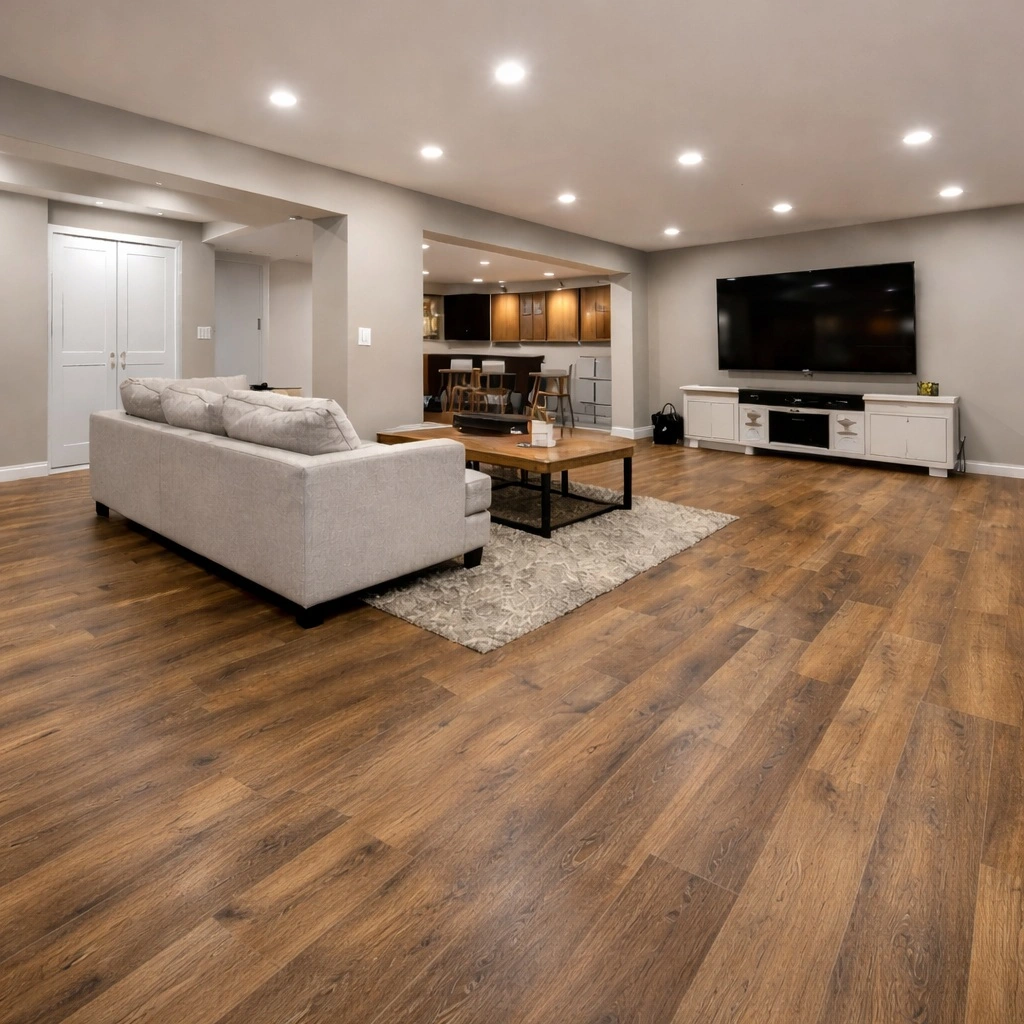
Basements need flooring that can handle moisture, temperature changes, and occasional leaks. The best flooring for a basement is typically waterproof vinyl such as Luxury Vinyl Plank (LVP) or SPC, followed by porcelain tile, because these materials resist moisture and perform well over concrete subfloors.
If you’re on a budget, there are affordable flooring types that still look great and perform well below ground. For concrete subfloors, some materials bond and level better than others.
Choosing between vinyl and laminate depends on your priorities. Vinyl offers better water resistance, while laminate can be more budget-friendly. Bathrooms in basements need fully waterproof surfaces that can handle humidity and spills.
Installation costs vary depending on material, labor, and basement size, but knowing what to expect helps you plan smartly.
If you would like to see how waterproof flooring performs in a real home, explore our recent basement flooring renovation project in Langley, where luxury vinyl plank was installed over an unfinished concrete slab.
This guide compares the best waterproof basement flooring options, explains what works and what doesn’t, and helps you choose the right floor for your basement.
Best Basement Flooring Options Compared
| Flooring Type | Waterproof Level | Best for Wet Basements | Works Over Concrete | Cost Range |
|---|---|---|---|---|
| Vinyl (LVP / LVT / SPC) | 100% waterproof | Yes | Yes | $4 to $8 |
| Tile (Porcelain / Ceramic) | Nearly waterproof | Yes | Yes | $7 to $12 |
| Rubber Flooring | Water resistant | Yes | Yes | $4 to $9 |
| Raised Flooring Systems | Moisture-safe system | Yes | Yes | $6 to $15 |
| Engineered Wood | Moisture resistant | No | Yes (with barrier) | $6 to $12 |
| Water-resistant Laminate | Water resistant only | No | Yes (with barrier) | $3 to $6 |
Best Waterproof Basement Flooring Options for Wet Basements
If your basement experiences moisture, humidity, or occasional water intrusion, waterproof flooring is essential. Fully waterproof options prevent mold growth, resist warping, and protect the concrete subfloor underneath.
Vinyl flooring, porcelain tile, rubber flooring, and raised flooring systems are the most reliable solutions for wet basements. These materials are designed to handle spills, humidity, and damp conditions without long-term damage.
Why Waterproof Flooring Is the Best Option for Basements
Basements almost always come with moisture. Whether it’s from humidity, leaks, or occasional flooding, water has a way of sneaking in. That’s why picking the right flooring for damp basements matters. The wrong material can warp, rot, or trap moisture, turning small problems into costly headaches.
The simplest way to protect your basement is with waterproof flooring. It blocks mold and moisture, and options like vinyl, SPC, or waterproof laminate handle damp conditions effortlessly. This keeps your basement durable, low-maintenance, and worry free.
Why It’s the Best Option for Basements
-
- Blocks water and mold: This flooring protects your basement from moisture damage while keeping mold and mildew away.
-
- Durable: Waterproof flooring is tough enough for heavy use and low-maintenance so you don’t have to worry constantly.
-
- Perfect for damp areas: Waterproof flooring is specifically designed to handle the unique challenges of basement floors.
Things to Keep in Mind
When picking the best waterproof flooring for a damp basement, keep these key points in mind:
-
- Some options are more expensive than laminate or carpet.
-
- A few styles may not feel as warm or cozy as wood.
With the right flooring for wet basements, you get long lasting protection and peace of mind, knowing your floors can stand up to whatever moisture comes their way.
1. Vinyl Flooring: Stylish and Moisture Resistant
Vinyl flooring is a top choice for basements. It’s fully waterproof, so it handles spills and damp conditions easily. Modern designs mimic wood or stone, giving your basement a stylish, low maintenance look. For homeowners looking for waterproof flooring with water damage protection, vinyl offers a reliable, long-lasting solution.
Why Choose Vinyl Flooring for Your Basement?
-
- 100% waterproof and mold resistant: Vinyl resists spills and damp conditions, preventing warping and mold while keeping your basement dry and safe.
-
- Comfortable Underfoot: Softer and quieter than tile, making it pleasant to walk on.
-
- Durable and Long Lasting: Tough enough to handle foot traffic and daily use in a basement environment.
-
- Variety of Styles: Available in wood look, stone textures, and modern finishes to suit any basement décor.
Key Points to Consider
-
- Lower-quality vinyl can dent or scratch more easily, so investing in a good brand is worth it.
-
- Cheaper options may be affected by extreme temperature or humidity changes in the basement.
2. Laminate Flooring: Affordable and Attractive Option
If you’re looking for water resistant flooring options for your basement, waterproof laminate is a practical and stylish solution. It looks like real wood but handles spills and damp conditions much better than standard laminate, making cleanup quick and easy.
Key Features of Laminate Flooring for Basements
-
- Realistic Wood Look: Laminate Flooring Makes your basement feel cozy and inviting, just like real hardwood.
-
- Durable Surface: It Resists scratches and minor moisture, so everyday accidents won’t ruin your floor.
-
- Budget Friendly: Laminate offers style and practicality without the high cost of fully waterproof flooring
Important Considerations
-
- Not Fully Waterproof: Standing water can still cause damage. Always mop up spills promptly.
-
- Seams Matter: Poor installation can let water seep through gaps.
-
- Use a Moisture Barrier: A barrier over concrete subfloors adds extra protection and peace of mind.
if your basement deals with the occasional spill or a bit of dampness, waterproof laminate flooring is a great pick. it’s affordable, looks good, and handles moisture easily.
3. Wood Flooring: Classic and Elegant Choice
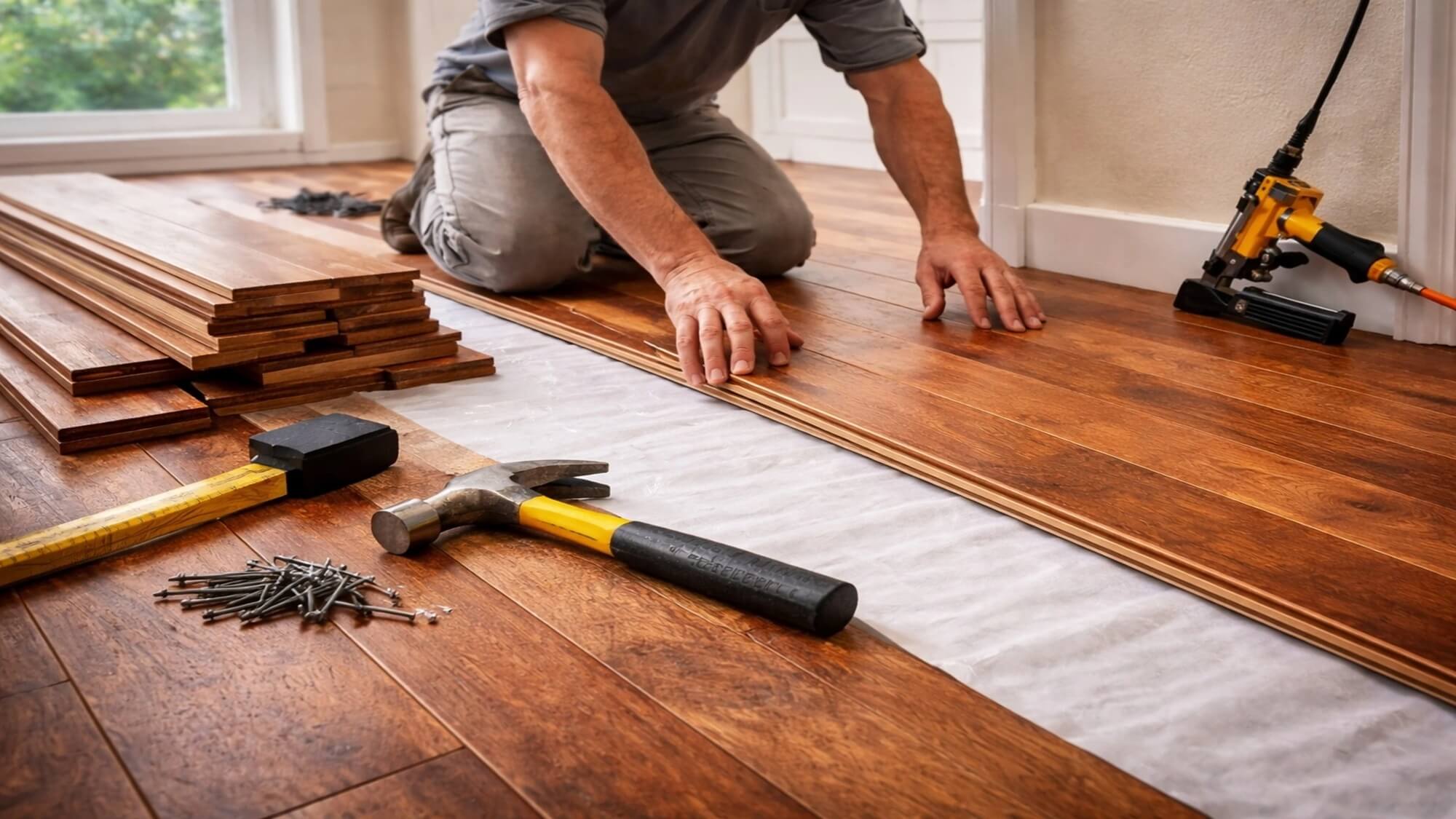
Wood flooring is one of the most moisture-resistant options for homeowners considering basement floors. It also has a classic, elegant look. Many love the appearance of wood but worry about moisture. Engineered wood is a smart choice. It looks polished and high quality and handles moisture better than standard hardwood, which can warp or swell.
Why Choose Wood for Your Basement
-
- Polished Look: Engineered wood makes your basement feel put-together and high-quality.
-
- Adds Value: Installing wood can boost your home’s resale appeal.
-
- Handles Humidity Better: Engineered wood resists changes from basement dampness better than solid hardwood.
Things to Remember
-
- Moisture Damage: Wood can warp if water seeps in. The fix is to use engineered wood with a moisture barrier over concrete floors.
-
- Hard Floors: Wood can feel tough underfoot. Adding rugs or foam mats in key areas makes walking more comfortable.
-
- Maintenance Concerns: Wood needs care to stay nice. Regular cleaning and quickly wiping up spills will keep it looking good.
For homeowners who want a durable, attractive basement floor, engineered wood is a smart choice. Add a moisture barrier to block water and prevent damage, and place rugs for extra comfort.
4. Rubber Flooring: Practical for High-Moisture Areas
Rubber flooring isn’t the first option most homeowners consider for basements, but it’s a surprisingly solid option. it’s great for moisture-prone areas. it resists water, handles spills easily, and stays strong and comfortable. it also works well for home gyms, play areas, or workshops.
Advantages of Rubber Flooring
-
- Water and Slip Resistant: Rubber flooring keeps your basement floors safe and dry, even during spills.
-
- Cushioned and Comfortable: Softer underfoot than wood or tile, making it easier on joints during workouts or playtime.
-
- Reduces Noise: Rubber flooring absorbs sound, which is perfect if your basement is used for exercise or kids’ activities.
What to Look For
-
- Limited Design Options: Rubber tends to have fewer decorative styles, so it’s more practical than elegant.
-
- Initial Odor: Some rubber products may have a slight smell at first, which fades over time.
-
- Cost: High quality rubber can be more expensive than vinyl or laminate.
If you’re upgrading your basement, rubber flooring is a smart pick. It’s not just about durability; it’s about having a floor that can handle moisture, heavy use, and everyday spills.
5. Raised Flooring: Smart Solution for Damp Basements
Raised flooring is a fantastic option for basement floors if you need something that handles moisture. By lifting the floor above the concrete, it lets air circulate and keeps water from sitting against your flooring. It’s a smart choice for moisture-prone areas. Practical, protective, and low-maintenance, raised flooring helps your basement stay dry and tension free.
Benefits of Raised Flooring:
-
- Keeps Floors Dry: Raised flooring creates an air gap that helps prevent mold, mildew, and warping.
-
- Versatile: Raised flooring works well with vinyl, laminate, or engineered wood on top.
-
- Easy Access: Raised flooring makes it simpler to run wiring, plumbing, or heating under the floor.
Things to Keep in Mind
-
- Adds Height: Raised flooring sits a few inches above the original concrete slab.
-
- Cost Consideration: Installing a raised flooring system can be more expensive than standard flooring.
-
- Installation: Need to hire a professional to ensure the floor stays level and drains properly.
If you want a basement floor that handles damp conditions while staying easy to maintain, raised flooring for a basement is a smart choice. It protects your floor, keeps it level, and makes cleaning simple, giving you peace of mind for years to come.
Best Flooring for Concrete Basement Floors
Concrete subfloors require materials that resist moisture and temperature changes. Vinyl flooring, tile, rubber flooring, and raised flooring systems perform best over concrete slabs. Always use a moisture or vapor barrier to protect your flooring and extend its lifespan.
6. Tile Flooring: Perfect for Wet Zones
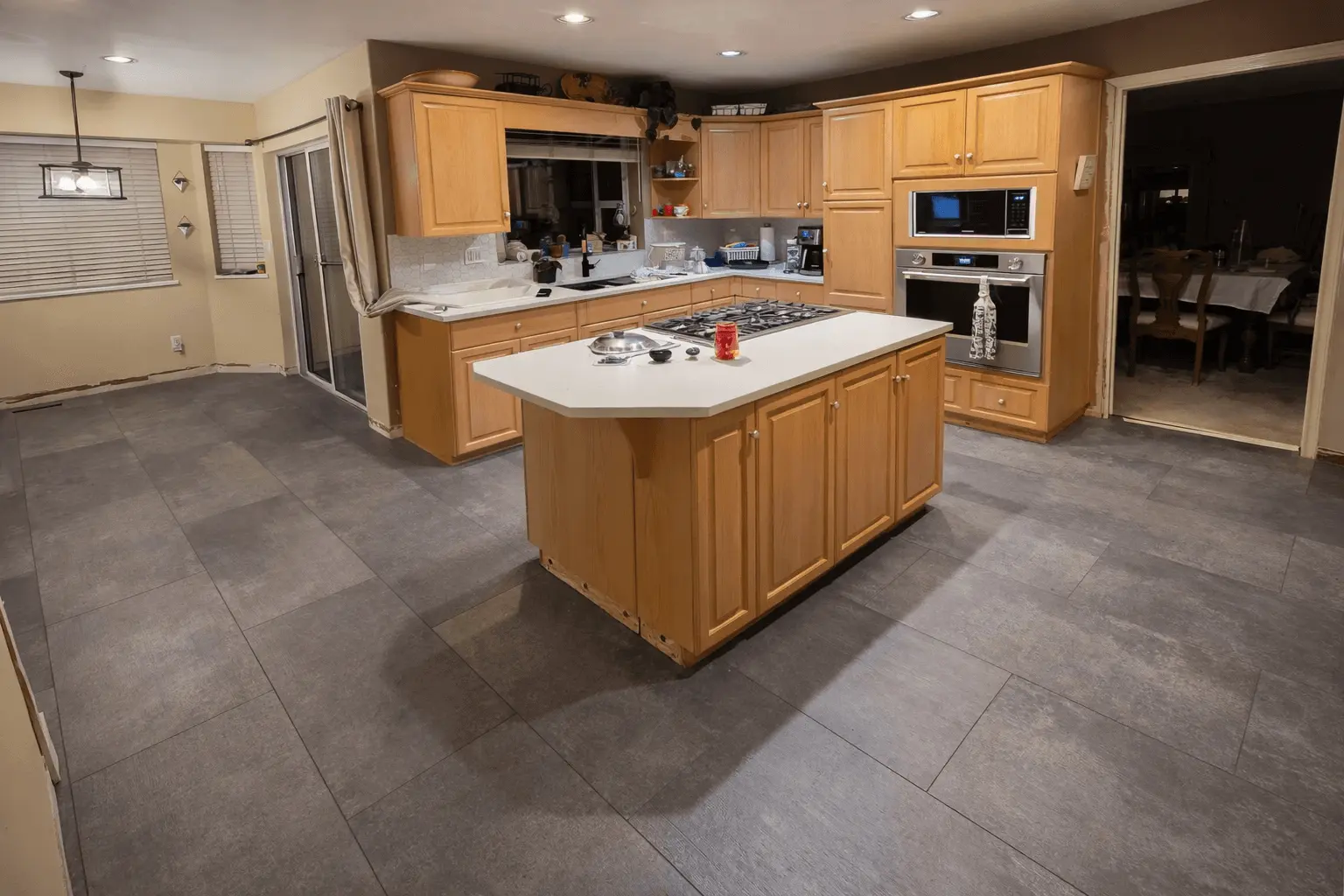
Are you dealing with a damp basement? It can be frustrating when water seeps into floors and spills cause lasting damage. If you’re looking for flooring for wet areas, porcelain and ceramic tiles are excellent choices . Porcelain tiles are nearly completely waterproof, while ceramic tiles also handle moisture effectively. Both resist warping and staining, keeping your basement floor safe and durable.
Why Choose Tile Flooring for Basements
-
- Keeps water under control: Even if a pipe leaks or laundry water spills, porcelain and ceramic tiles won’t absorb it, protecting your subfloor.
-
- Handles heavy use: Kids, pets, or frequent visitors won’t dent or scratch the surface.
-
- Pairs with heating: Cold floors can be uncomfortable, but tiles work well with in-floor heating to make them cozy.
Potential Downsides of Tile
-
- Cold underfoot: Tiles can feel chilly, especially in winter, unless you use rugs or add in-floor heating.
-
- Grout maintenance required: Grout lines can trap dirt and moisture, needing regular cleaning and sealing to prevent stains or mold.
-
- Installation can be tricky: Improper DIY installation can cause uneven tiles or leaks, so hiring a professional is often necessary.
Vinyl vs. Laminate: Choosing the Best Basement Floor
When deciding between vinyl vs laminate for your basement, moisture is the biggest factor. Here’s a quick comparison:
Vinyl:
-
- 100% waterproof and perfect for damp areas
-
- Durable and long-lasting.
-
- Easy to clean and maintain.
Laminate:
-
- Looks like real wood and is budget-friendly.
-
- Works best in dry or raised areas.
-
- Can swell or warp if exposed to water.
vinyl is the safer, long-term choice for most basements. laminate can work if your basement stays dry or has a proper moisture barrier.
Best Flooring for Basement Bathrooms
Basement bathrooms require fully waterproof flooring. Luxury vinyl plank, luxury vinyl tile, porcelain tile, and ceramic tile are the best options. These materials resist humidity, spills, and standing water while remaining easy to clean.
Basement Flooring Cost: What to Expect
Knowing how much it costs to install a basement floor helps you plan and avoid surprises. Prices vary depending on the material, labor, and any prep work needed.
Typical Costs per Square Foot:
Vinyl / SPC: $4–$8
Laminate: $3–$6
Wood: $6–$12
Rubber: $4–$9
Tile: $7–$12
Additional Costs to Consider:
-
- Leveling concrete or adding a moisture barrier
-
- Raised floor installation
-
- Professional labor fees
Understanding basement flooring costs helps you budget properly and choose the right material for your needs.
Final Thoughts on Basement Flooring
The right basement flooring keeps your floors dry, durable, and easy to maintain. Waterproof and vinyl handle moisture without worry. Tile works best in wet areas. Rubber is ideal for home gyms or playrooms. Laminate is a budget-friendly choice for dry spots, while wood gives a classic, high-quality look.
Choosing the right flooring today protects your basement from damage and makes it a comfortable, long lasting space you can actually enjoy.