Hardwood flooring remains one of the most popular upgrades for Canadian homes due to its durability, long-term value, and resale appeal.
The cost to install hardwood floors in Canada typically ranges from $9 to $25 per square foot installed. For most projects, homeowners spend between $8,000 and $22,000, depending on the size of the space, wood type, subfloor condition, and local labour rates.
Installation costs can vary based on factors such as species, plank width, layout complexity, and subfloor preparation. Understanding these variables helps you plan your budget accurately before requesting quotes from contractors.
Hardwood Floor Installation Cost Per Square Foot
One of the most common questions homeowners ask is how much hardwood flooring costs per square foot. This pricing method is widely used across Canada because it provides a clear way to estimate total project costs.
In most cases, installed hardwood flooring costs between $9 and $25 per square foot, including both materials and professional labour. The final price depends on the wood species selected, installation complexity, and the level of subfloor preparation required.
Here is a general breakdown of what most homeowners can expect:
| Quality Level | Installed Cost (Per Sq Ft) | Typical Use |
| Budget | $9 – $12 | Small rooms, basic oak or engineered hardwood |
| Mid-range | $12 – $18 | Most homes and standard installations |
| Premium | $18 – $25+ | Wide planks, exotic wood, custom layouts |
Budget options are typically used for bedrooms, offices, or smaller areas where appearance is important, but premium finishes are not necessary. These usually include standard oak, maple, or entry-level engineered hardwood.
Mid-range pricing covers the majority of residential installations. This level includes higher quality wood, wider planks, and more consistent finishing, making it a popular choice for living rooms, hallways, and full-home renovations.
Premium hardwood flooring includes luxury materials such as walnut, hickory, or exotic wood species, along with wide plank designs and custom installation patterns. These projects require more labour and higher-grade materials, which is why the cost per square foot is significantly higher.
Using this per-square-foot range allows homeowners to quickly estimate their budget before requesting detailed quotes. For example, multiplying your total square footage by an average of $15 per square foot will give a reasonable estimate for most standard hardwood flooring projects.
How Much Does It Cost by Home Size?
One of the biggest problems with most hardwood flooring cost guides is that they only talk about price per square foot. While that is useful, most homeowners want to know what the project will cost in real dollars based on the size of their space.
Below are typical installed price ranges for hardwood flooring in Canada, based on common room and home sizes.
| Area Size | Low | Average | High |
| 200 sq ft | $1,800 | $2,800 | $5,000 |
| 300 sq ft | $2,700 | $4,200 | $7,000 |
| 400 sq ft | $3,600 | $5,600 | $9,000 |
| 500 sq ft | $4,500 | $7,500 | $11,000 |
| 1,200 sq ft | $10,800 | $16,800 | $24,000 |
A 200 to 400-square-foot project usually covers a bedroom, office, or small living area. These jobs tend to cost slightly more per square foot because installers often have minimum labour charges, and smaller rooms still require the same setup, cutting, and finishing work.
A 500 square foot space is typical for a larger living room, open-concept area, or multiple connected rooms. This size allows for better pricing efficiency, which is why the cost per square foot is often more consistent.
A 1,200 square foot installation is common for a full condo or the main floor of a house. At this size, homeowners usually benefit from better material pricing, but the total cost is higher due to the amount of wood, labour, and finishing required.
These estimates include hardwood materials and standard professional installation. They do not include major extras such as old floor removal, subfloor repairs, moisture barriers, or specialty trims, which can add to the total price.
This size-based pricing gives a much clearer picture of what a hardwood flooring project will actually cost, which is why it is more useful than relying on per-square-foot numbers alone.
What Is Included in Hardwood Flooring Installation?
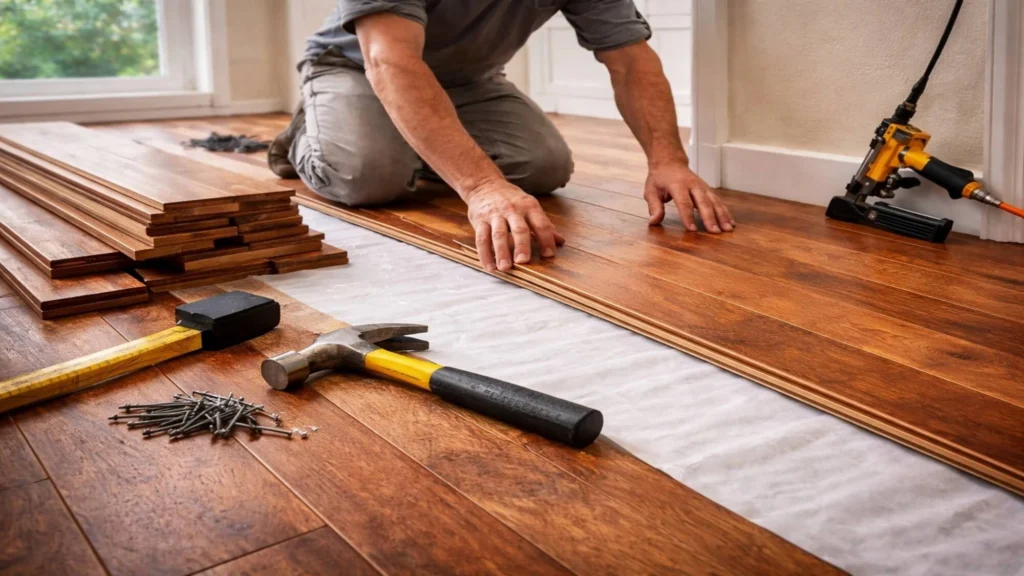
When you are quoted a price for hardwood floor installation, it usually covers more than just the wood itself. A standard installation typically includes the hardwood planks, professional labour, and the materials needed to install the floor properly. This means underlayment or a moisture barrier is added where required, the boards are cut and fitted to the shape of each room, and basic finishing work, such as transitions and trim, is completed so the floor looks clean and finished.
These are the core services most homeowners expect when they see an installed price per square foot, and they form the foundation of a properly installed hardwood floor.
Cost by Hardwood Type
The type of wood you choose has a major impact on how much your hardwood flooring project will cost. Some species are widely available in Canada and easier to work with, while others are rarer, harder, or more difficult to install, which increases both material and labour costs.
| Wood Type | Installed Cost (Per Sq Ft) |
| Oak | $9 – $14 |
| Maple | $10 – $15 |
| Hickory | $11 – $17 |
| Walnut | $14 – $22 |
| Engineered Hardwood | $10 – $18 |
| Exotic Woods | $18 – $30+ |
Oak is one of the most common and affordable hardwood options. It is durable, easy to refinish, and works well in almost any room, which is why it is widely used in Canadian homes.
Maple has a smoother grain and a lighter, more modern appearance. It is slightly more expensive than oak but offers excellent durability, making it popular for living rooms and high-traffic areas.
Hickory is one of the hardest domestic woods available. Its strength and rustic look make it a good choice for busy households, though it costs more because it is harder to mill and install.
Walnut is known for its deep, rich colour and premium appearance. It is commonly used in upscale interiors, which is reflected in its higher price.
Engineered hardwood consists of a real wood surface layered over plywood. It is often more stable in areas with moisture or temperature changes and can be more affordable than solid hardwood, depending on the product.
Exotic woods such as Brazilian cherry, teak, or mahogany are the most expensive. These species are imported, highly durable, and visually distinctive, which makes them a luxury option for hardwood flooring projects.
What Makes Hardwood Flooring More Expensive?
Not all hardwood flooring projects cost the same, even when two homes look similar on paper. Several factors can significantly affect how much you end up paying.
Wood species are one of the biggest price drivers. Common options like oak and maple are more affordable because they are widely available, while walnut, hickory, and exotic woods cost more due to higher material prices and increased installation difficulty.
Square footage also plays a major role. Larger spaces require more material and more labour, which increases the total cost. While the price per square foot may be slightly lower on big jobs, the overall bill is still higher simply because more work is involved.
Plank width affects both material and installation costs. Wider planks usually cost more to purchase and require more precise installation, which can increase labour time. Narrower planks are often less expensive but require more pieces to cover the same area.
Layout complexity matters more than many homeowners expect. Rooms with many corners, closets, doorways, or staircases take longer to install and create more waste, which raises the cost.
Subfloor conditions can add or remove thousands of dollars from a project. If the subfloor is uneven, damaged, or not suitable for hardwood, it must be repaired or levelled before installation, adding to both material and labour expenses.
Location and labour rates also have a strong influence. Installation in major cities generally costs more due to higher wages, travel time, and operating costs, while smaller towns and rural areas tend to have lower labour rates.
All of these factors combine to determine where your project falls within the typical price range.
Hidden Costs That Affect Your Final Price
Many hardwood flooring quotes look simple at first, but the final bill often changes once the work begins. That is because there are several common costs that are not always included in the advertised price per square foot.
Old flooring removal is one of the most frequent add-ons. If you are replacing carpet, tile, laminate, or existing hardwood, removing and hauling away the old material typically adds to the total cost, especially if there are multiple layers or glued surfaces.
Subfloor levelling is another major expense. Hardwood floors need a flat, stable base. If the subfloor is uneven, damaged, or squeaky, it must be repaired or levelled before installation can begin. This work is not included in most standard quotes.
Moisture barriers are often required, particularly when installing over concrete or in basements and condos. These protective layers help prevent warping and long-term damage but add material and labour costs.
Trim and transitions are needed where hardwood meets walls, doorways, stairs, or other types of flooring. While these pieces may seem minor, they can add a noticeable amount to the final price, especially in larger or more detailed layouts.
Condo soundproofing is another cost that many homeowners do not anticipate. Many buildings require acoustic underlayment or additional sound control materials to meet noise regulations, which increases both material and installation costs.
Delivery and disposal fees are also commonly overlooked. Getting hardwood delivered to a home, especially in a condo or high-rise building, and disposing of old flooring can add extra charges to the project.
These hidden costs are one of the main reasons hardwood flooring projects often end up costing more than the initial estimate. Understanding them in advance helps you budget more accurately and avoid surprises.
Hardwood vs Engineered vs Vinyl
When comparing flooring options, it is important to look beyond just the upfront cost. Durability, moisture resistance, and long-term value all affect how much you actually get from your investment
| Flooring | Installed Cost | Lifespan | Water Resistance |
| Hardwood | $12–$25 | 40-60 years | Low |
| Engineered | $10–$20 | 25-40 years | Medium |
| Vinyl Plank | $4–$9 | 15-25 years | High |
Hardwood flooring offers the longest lifespan and the strongest resale value. It can be refinished multiple times, which allows it to last for decades. However, it is more sensitive to moisture and costs more to install.
Engineered hardwood provides the look of real wood with better stability. It is more resistant to humidity and temperature changes, making it suitable for basements, condos, and homes with fluctuating indoor conditions. It usually costs less than solid hardwood and is easier to install.
Vinyl plank flooring is one of the most affordable and water-resistant options available. It performs especially well in areas where moisture is common, such as kitchens, bathrooms, and basements.
If you are finishing a lower-level space and want to see what works best, you can explore the best flooring options for basements in our detailed guide. While vinyl is practical and budget-friendly, it does not offer the same long-term lifespan or resale value as hardwood or engineered wood.
Choosing the right option depends on your budget, where the flooring will be installed, and how long you plan to stay in your home.
Is Hardwood Flooring Worth the Cost?
For many homeowners, hardwood flooring is worth the investment because it adds long-term value beyond just appearance. Homes with hardwood floors tend to sell for more and attract more buyers, since many people see hardwood as a premium feature and prefer it over carpet or lower-cost flooring.
Hardwood is also extremely durable. When properly installed and maintained, it can last for decades, even in high-traffic areas. Unlike many other flooring types, it does not need to be replaced when it starts to show wear.
One of the biggest advantages is that hardwood can be refinished. Scratches, fading, and surface damage can be sanded out and the floor can be stained and sealed again, restoring its original look. This makes hardwood a much better long-term investment compared to floors that have to be completely replaced once they wear out.
If you’re thinking about refinishing your floors, it’s a good idea to check typical hardwood floor refinishing costs so you know what kind of budget to expect.
Because of its durability, appearance, and ability to be renewed, hardwood flooring continues to be one of the most valuable flooring options for residential homes.
Hardwood Flooring Costs Near You
Hardwood flooring prices can vary depending on where you live. Labour rates, travel time, material availability, and local demand all affect what installers charge, which is why the same flooring project can cost more in one city than another.
In areas such as Langley, Vancouver, Edmonton, and Abbotsford, prices often differ based on how busy the market is and how easy the job site is to access. Larger urban centres like Vancouver typically have higher labour costs, higher operating expenses for contractors, and more demand for skilled installers, which pushes prices upward. Smaller cities and surrounding communities may offer slightly lower rates, but availability and travel charges can still influence the final quote.
Requesting detailed quotes from local hardwood flooring installers in your area remains the most accurate way to determine your final project cost.
Frequently Asked Questions
How much does it cost to install hardwood floors in Canada?
In most parts of Canada, hardwood flooring installation costs between $9 and $25 per square foot, including materials and labour. For an average home, this usually works out to $8,000 to $22,000, depending on the size of the space, the type of wood, and how much preparation is required.
How much does hardwood flooring cost per square foot?
Most homeowners pay between $12 and $18 per square foot for a standard hardwood installation. Budget projects can be closer to $9 to $12, while high-end hardwood and custom installations can exceed $20 per square foot.
How much does it cost to install hardwood floors for 1,200 square feet?
For a 1,200 square foot space, the total cost is typically between $10,800 and $24,000. The final price depends on the wood species, layout, and whether subfloor repairs or old floor removal are needed.
Is engineered hardwood cheaper than solid hardwood?
Engineered hardwood is often less expensive to install than solid hardwood. It usually costs $10 to $18 per square foot installed, while solid hardwood ranges from $12 to $25 per square foot. Engineered flooring is also more stable in areas with moisture or temperature changes.
Can I install hardwood floors myself to save money?
DIY installation can reduce labour costs, but hardwood flooring requires specialized tools and experience. Mistakes can lead to gaps, uneven boards, or long-term damage, which can end up costing more to fix than hiring a professional from the start.
Is it cheaper to refinish or replace hardwood floors?
Refinishing is usually much cheaper than replacing hardwood. Refinishing typically costs a few dollars per square foot, while replacing hardwood involves new materials and full installation costs. If your existing floor is in good condition, refinishing is often the better option.
Final Thoughts
Installing hardwood floors in Canada typically ranges from $9 to $25 per square foot, but the final cost depends on wood type, room size, labour rates, and preparation requirements. Reviewing the full scope of work and understanding what is included in your quote allows for more accurate budgeting and fewer surprises.
Requesting detailed quotes from local hardwood flooring installers in your area remains the most accurate way to determine your final project cost.